
Mercedes GLE Turbo Boost Sensor: Power Loss Diagnosed and Fixed

This Mercedes-Benz GLE came in with power loss under acceleration and an engine check light. XENTRY diagnostics pointed to the turbo boost pressure sensor. We fitted an OEM replacement and confirmed normal turbo performance. At least 6 months warranty on the repair.

Job completed: July 2026

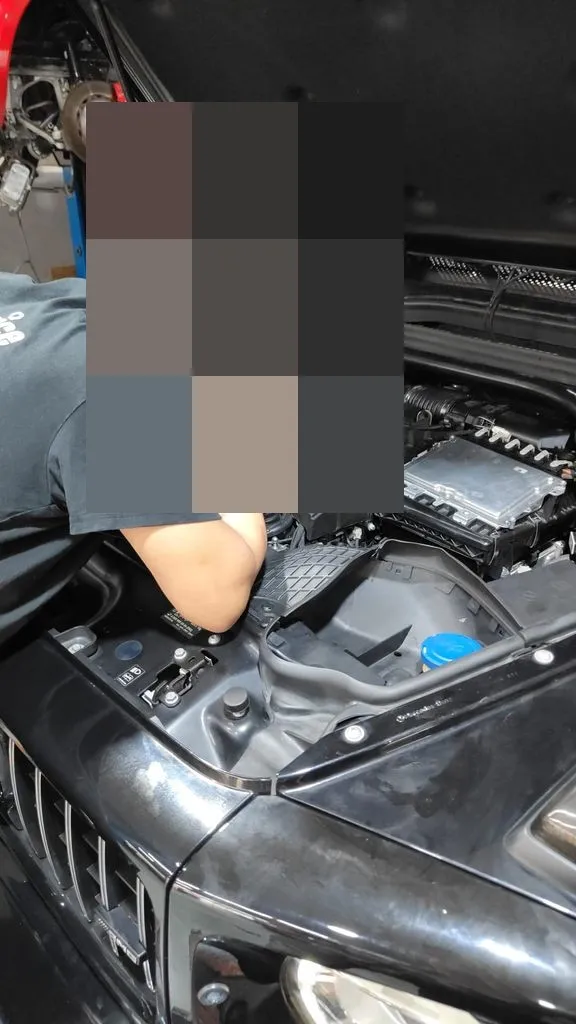
Engine bay of a black Mercedes-Benz GLE open during turbo boost sensor diagnosis at our Singapore workshop

Job completed: July 2026. Last updated: August 2026. Written from our workshop job records and photos; technical details are generalised where the records do not confirm them.

CarMercedes-Benz GLE
SymptomReduced power under acceleration; engine check light on
Fault foundTurbo boost pressure sensor failure (MAP sensor circuit fault)
Repair doneOEM boost pressure sensor replaced
PartsOEM Mercedes-Benz boost pressure sensor (A009 153 85 28 / Bosch 0 281 006 457)
Time takenTimeline confirmed at drop-off
CostQuoted after XENTRY confirmed the sensor fault
WarrantyAt least 6 months on the repair

What brought the GLE in

The owner noticed the GLE felt slower than usual, especially when pulling away from a standstill or merging on the expressway. The engine check light came on shortly after. It was not a dramatic failure: the car still drove, but the turbo was clearly not building boost the way it should.

For a GLE with a turbocharged engine, reduced boost means reduced power. The car runs in a kind of limp or reduced-performance mode while the engine management system registers a sensor fault and protects the turbo from further damage.


OEM Mercedes-Benz boost pressure sensor for the GLE, part number A009 153 85 28, before installation

The GLE turbo system and the boost pressure sensor

The Mercedes-Benz GLE uses a turbocharged engine. The turbocharger compresses air into the intake manifold, which allows the engine to burn more fuel and produce more power per stroke. A boost pressure sensor (also called a MAP sensor, manifold absolute pressure sensor) measures the pressure in the intake manifold and sends that reading to the engine management unit.

The ECU uses this reading to control fuel injection, ignition timing, and turbo boost levels. If the sensor sends a wrong or out-of-range signal, the ECU does not know how much boost the engine is actually making. To protect the turbo and engine, it reduces power and logs a fault code.

Engine bay of a black Mercedes-Benz GLE during turbo boost sensor replacement at our Singapore workshop

How we confirmed the fault

We connected XENTRY dealer-level diagnostics to the GLE and read the stored fault codes. The codes pointed directly to the boost pressure sensor circuit: the ECU was receiving an out-of-range signal from the sensor.

We cross-checked by looking at the live sensor data on XENTRY. The boost pressure reading from the sensor was inconsistent with actual throttle position and engine load. The sensor was sending wrong data, not the turbo itself. The turbo physically was fine; the sensor measuring its output was not.

This distinction matters. A turbo replacement runs into thousands. A sensor replacement is a fraction of that. Diagnosing with XENTRY avoids replacing expensive parts based on guesswork.

Why boost pressure sensors fail

Boost pressure sensors sit in the intake manifold, exposed to heat, pressure, and engine vibration over years of use. The sensing element inside is a piezoelectric or piezoresistive device that can drift out of calibration or fail outright with age.

In Singapore, heat cycles are more extreme than in temperate countries. The engine gets fully hot every day, and the temperature swings from hot to ambient overnight stress seals and electronics repeatedly. Sensors typically last well beyond 100,000km but can fail earlier on high-mileage or older vehicles.

The failure on this GLE was internal to the sensor: no damaged wiring, no connector fault, just a component that had reached the end of its service life.

What we did

Once the diagnosis confirmed the boost pressure sensor as the fault, the repair was straightforward.

  • Confirmed fault codes with XENTRY and noted the sensor circuit as the specific fault.
  • Located the boost pressure sensor on the intake manifold.
  • Removed the failed sensor.
  • Fitted the OEM replacement (A009 153 85 28, equivalent Bosch 0 281 006 457).
  • Cleared fault codes with XENTRY.
  • Checked live sensor data to confirm the reading was within spec.
  • Road tested to confirm normal power delivery under acceleration.

The car went from sluggish to pulling strongly. Engine check light gone. The repair carries at least 6 months warranty.

Before and after

Before

  • Reduced power under acceleration
  • Engine check light on
  • Turbo not building correct boost
  • ECU in reduced-performance mode to protect the engine

After

  • OEM boost pressure sensor fitted
  • Fault codes cleared, engine check light off
  • Normal turbo boost restored
  • Road tested and confirmed pulling strongly
  • At least 6 months warranty on the repair

What a Mercedes GLE boost sensor replacement costs

A boost pressure sensor replacement is one of the smaller turbo-related jobs: the OEM sensor plus a modest amount of labour, quoted after XENTRY confirms the fault.

The key point is the diagnostic step: without XENTRY telling you the fault is in the sensor circuit (not the turbo itself), it is easy to spend thousands replacing a perfectly good turbocharger when all that was needed was a sensor. Correct diagnosis is what separates a manageable repair from an expensive one.

We quote before we start and proceed only with your approval.

Keeping the GLE turbo system healthy

A turbo boost sensor is a long-life component that generally does not require routine replacement. A few things extend the life of the turbo system overall:

  • Let the engine idle for a minute before switching off after hard driving, especially on expressways. This lets the turbo spool down and the oil cool before the engine stops.
  • Use the correct engine oil specification. The turbo bearings are oil-fed. Wrong-spec oil leads to deposits and bearing wear over time.
  • Address any check engine light promptly. Running in limp mode with an undiagnosed fault puts unnecessary stress on other engine management components.
  • If you notice power loss, especially under load, investigate before the fault worsens. A sensor fault is cheap; a damaged turbo from running with wrong ECU readings is not.

About the workshop

This Mercedes-Benz GLE (Turbo boost pressure sensor replacement) was handled at 1 Car Service, an independent workshop in Sin Ming AutoCity, Singapore. For Mercedes-Benz, we use dealer-level XENTRY diagnostics. The work is backed by a warranty of at least 6 months. We hold a 4.9★ rating from 1,775+ Google reviews.

Signs your Mercedes GLE turbo or boost sensor needs attention

Power loss or engine light on your Mercedes GLE?

WhatsApp us the fault code if you have it, or just describe what you feel when you accelerate. We will tell you honestly what it likely is and quote before any work begins. Turbo and boost system faults are something we diagnose with XENTRY every week.

Mercedes GLE turbo boost sensor: common questions

How much does a Mercedes GLE boost pressure sensor replacement cost in Singapore?

It is one of the smaller turbo-related jobs: the OEM sensor plus a modest amount of labour. The exact cost depends on the engine specification and whether any related wiring needs attention. We quote before we start.

How do you tell if the problem is the sensor or the turbo itself?

With XENTRY dealer-level diagnostics, we read the exact fault code and check the live sensor data stream. A failing sensor sends a wrong reading even when the turbo is physically fine. We confirm the turbo is building boost correctly before deciding the sensor is the only fault. Correct diagnosis avoids replacing a perfectly good turbocharger.

Can a bad boost pressure sensor damage the turbo?

Running on a faulty sensor reading can cause the ECU to miscalculate fuel delivery and boost targets, which creates the potential for over- or under-boosting over time. The ECU normally enters a protective reduced-power mode when it detects a sensor fault, which limits further damage. Getting the sensor replaced promptly is the right move.

Do you use XENTRY diagnostics for the Mercedes GLE?

Yes. We use dealer-level XENTRY diagnostics to read fault codes, check live sensor data, and verify the repair. This is the same diagnostic system the Mercedes-Benz authorised dealer uses.

8033 7708 Chat with a specialist
WhatsApp 8033 7708
Specialist advice • Honest quote • No obligation