
Why a timing chain rattles at start-up
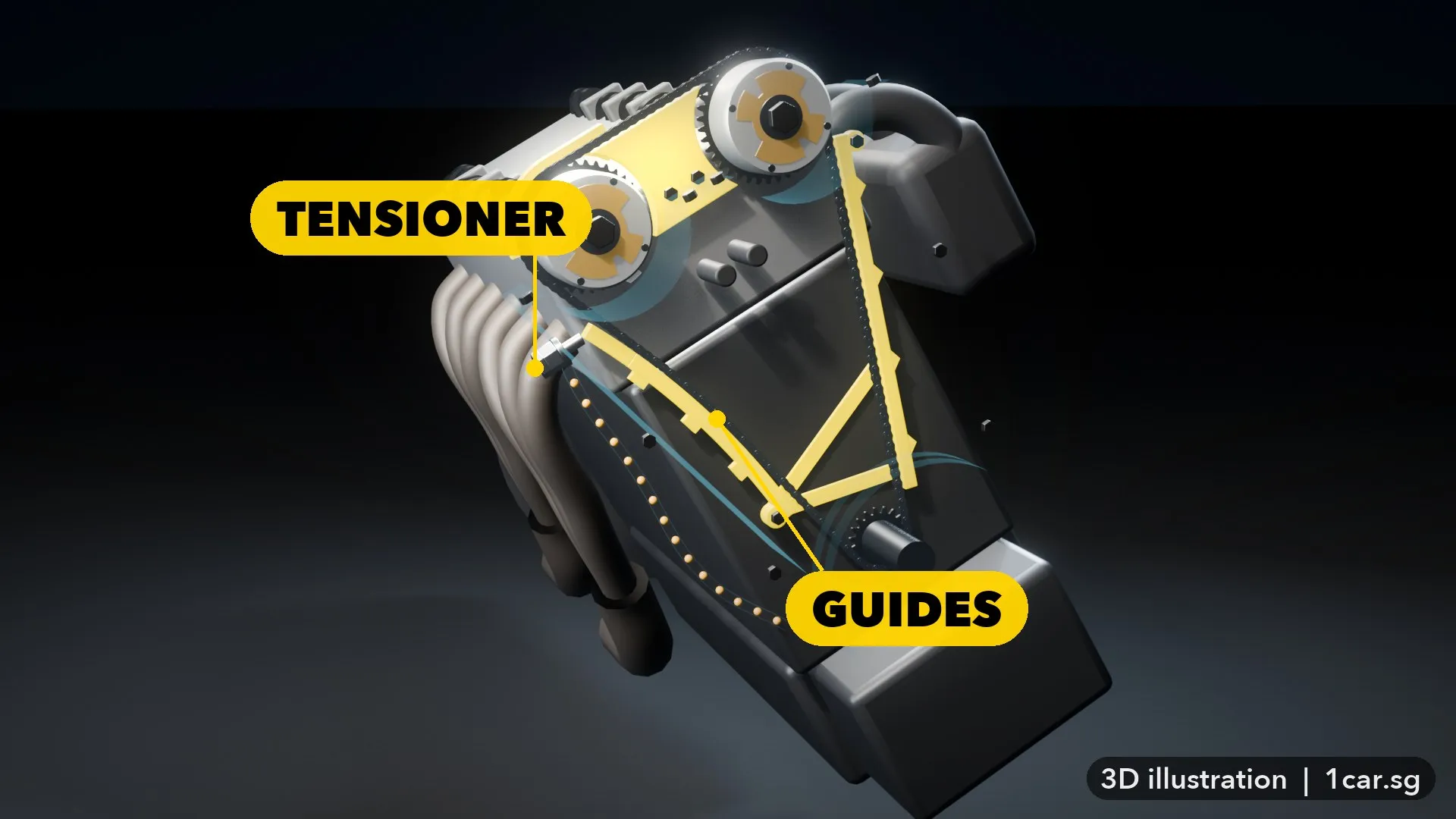
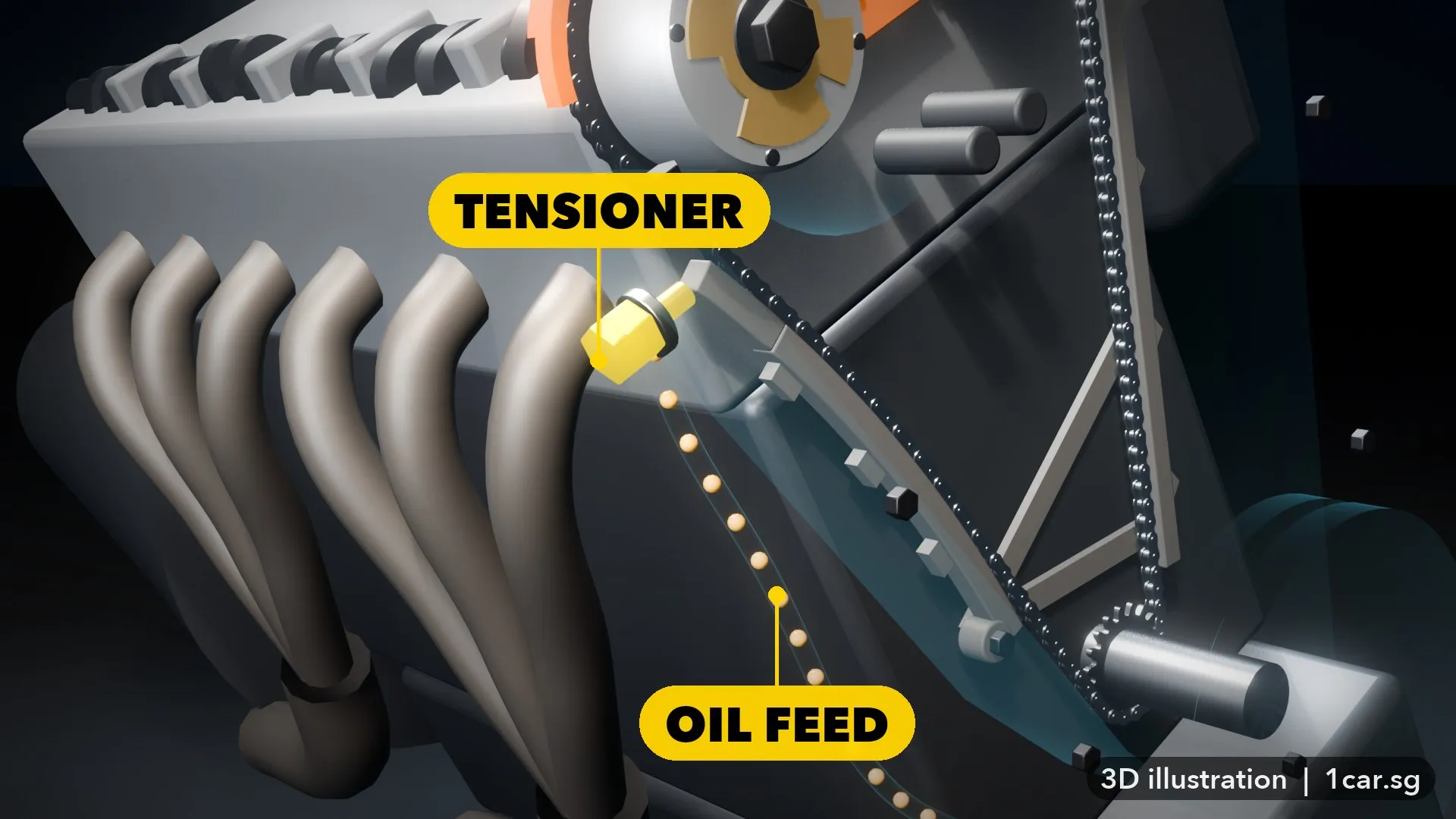
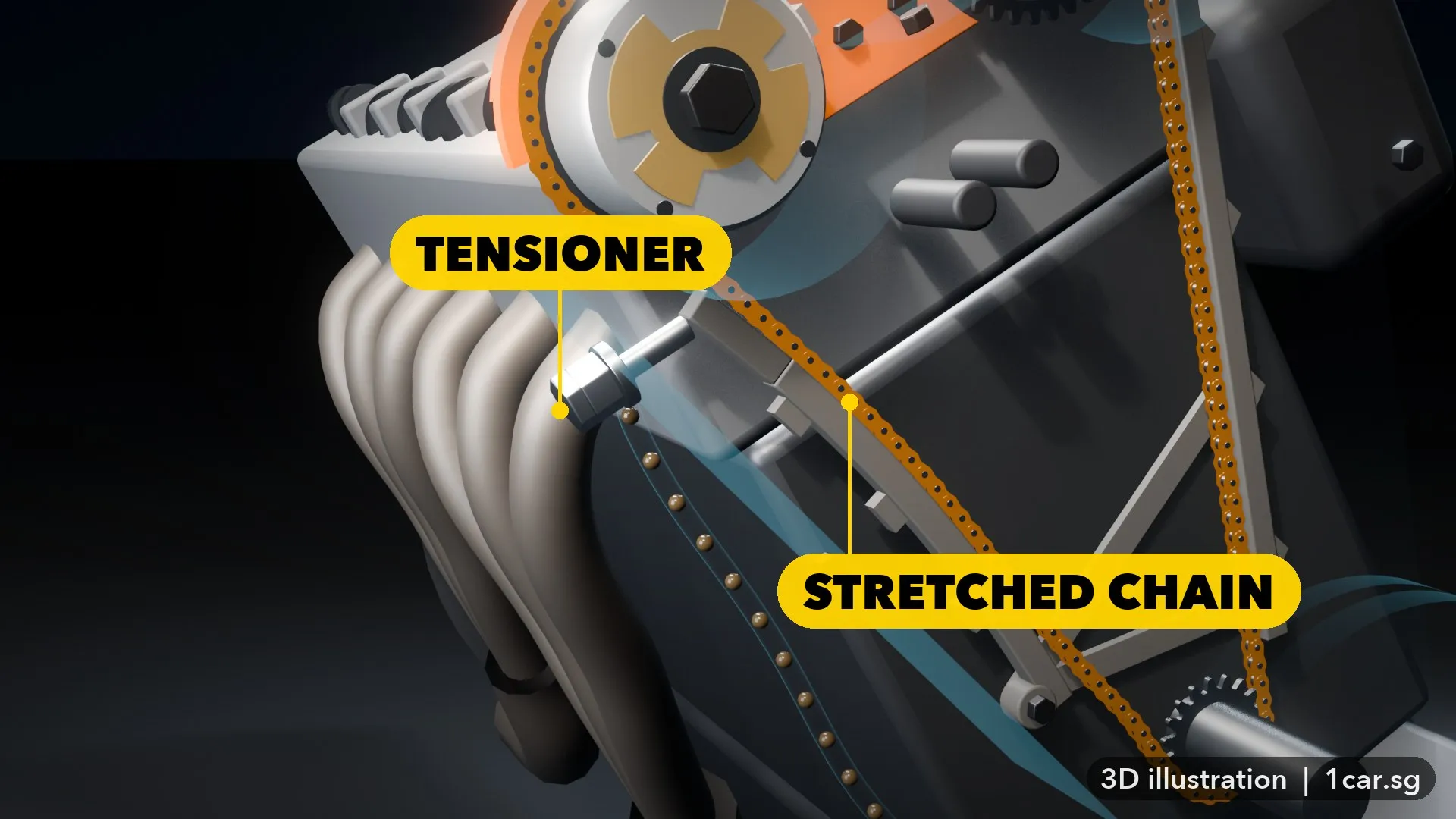
The tensioner works on engine oil pressure. When a car stands, oil can drain out of it. At the next start there is a short lag before the oil pump refills it, and for that moment the chain can vibrate and rattle until the pressure builds. A worn tensioner, or a chain that has grown long, makes that slack worse, because the tensioner has less travel left to take it up. BMW Group service information for one MINI engine traces a cold-start rattle to exactly this: not enough chain tension, or a tensioner that has not bled fully.
Not every start-up rattle is the chain, though. The same procedure has the technician rule out other parts first, such as the vacuum pump and the tank vent valve. That is why we listen to the engine and read its own data before quoting anything.
Other signs a timing chain needs checking
- The check-engine light. The engine computer compares the camshaft and crankshaft positions. When a long chain lets them drift apart, it can log a fault and light the warning. A worn chain does not always light it.
- Rough running or a misfire, as the valve timing shifts.
- A rattle that carries on past start-up, down to idle.
Other faults can cause each of these, so they point to a check, not a verdict.
Three habits that wear a timing chain out
- Putting off oil changes. Degraded oil is the main driver of wear in the chain's pins and bushes, and overdue oil changes are a known cause of a stretched chain.
- Short trips and stop-start traffic. Carmakers class short trips and stop-and-go driving as severe use. When the engine never fully warms up, moisture and combustion by-products stay in the oil, so it needs changing more often. Many BMWs time the oil service by the oil's condition rather than a fixed mileage, so follow the car's own service reminder and do not stretch it.
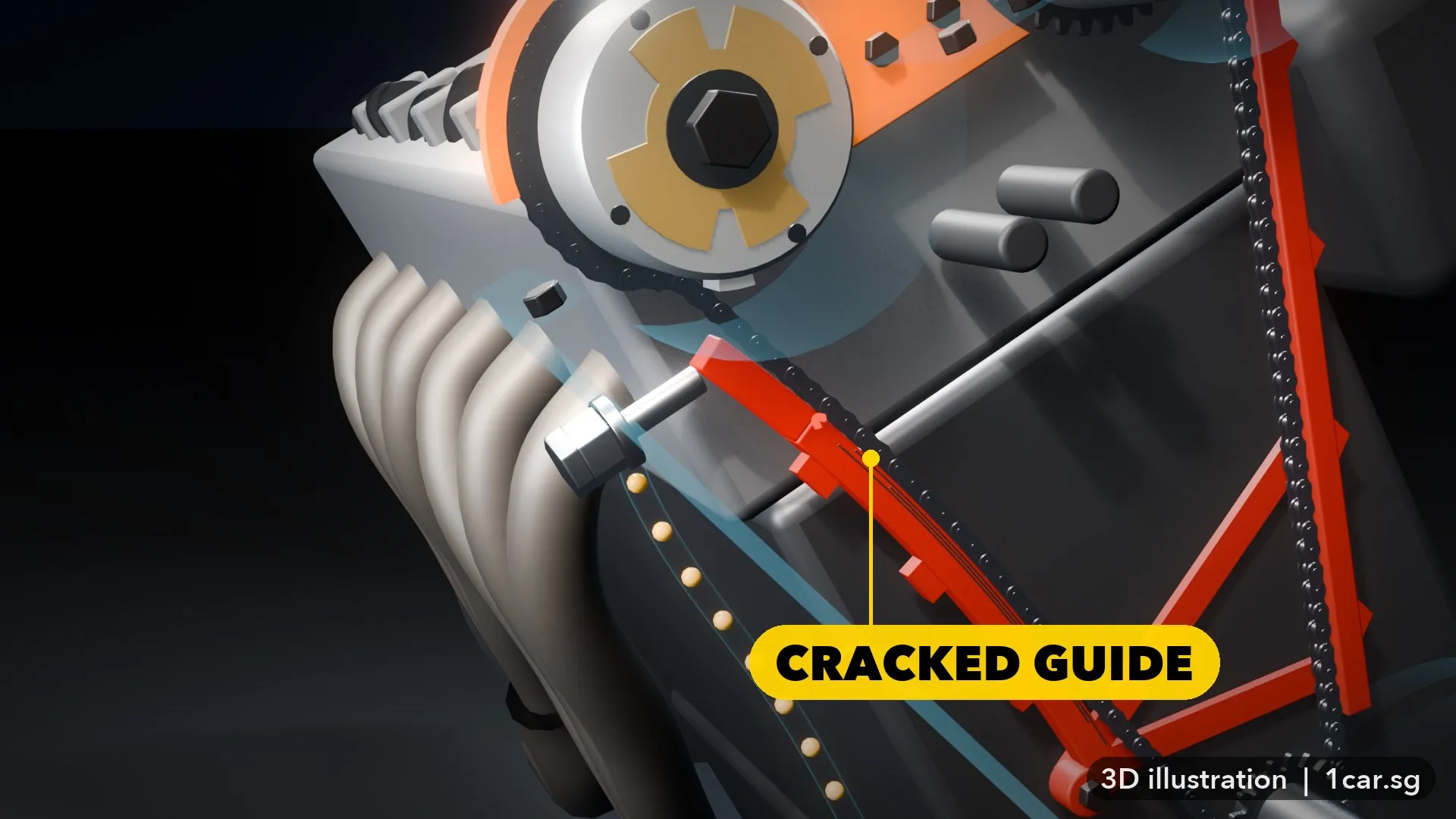
- Ignoring the rattle. The rattle is the warning. Left alone, the guides wear grooves and can crack and break, and a slack chain can jump a tooth.
What a timing chain repair involves
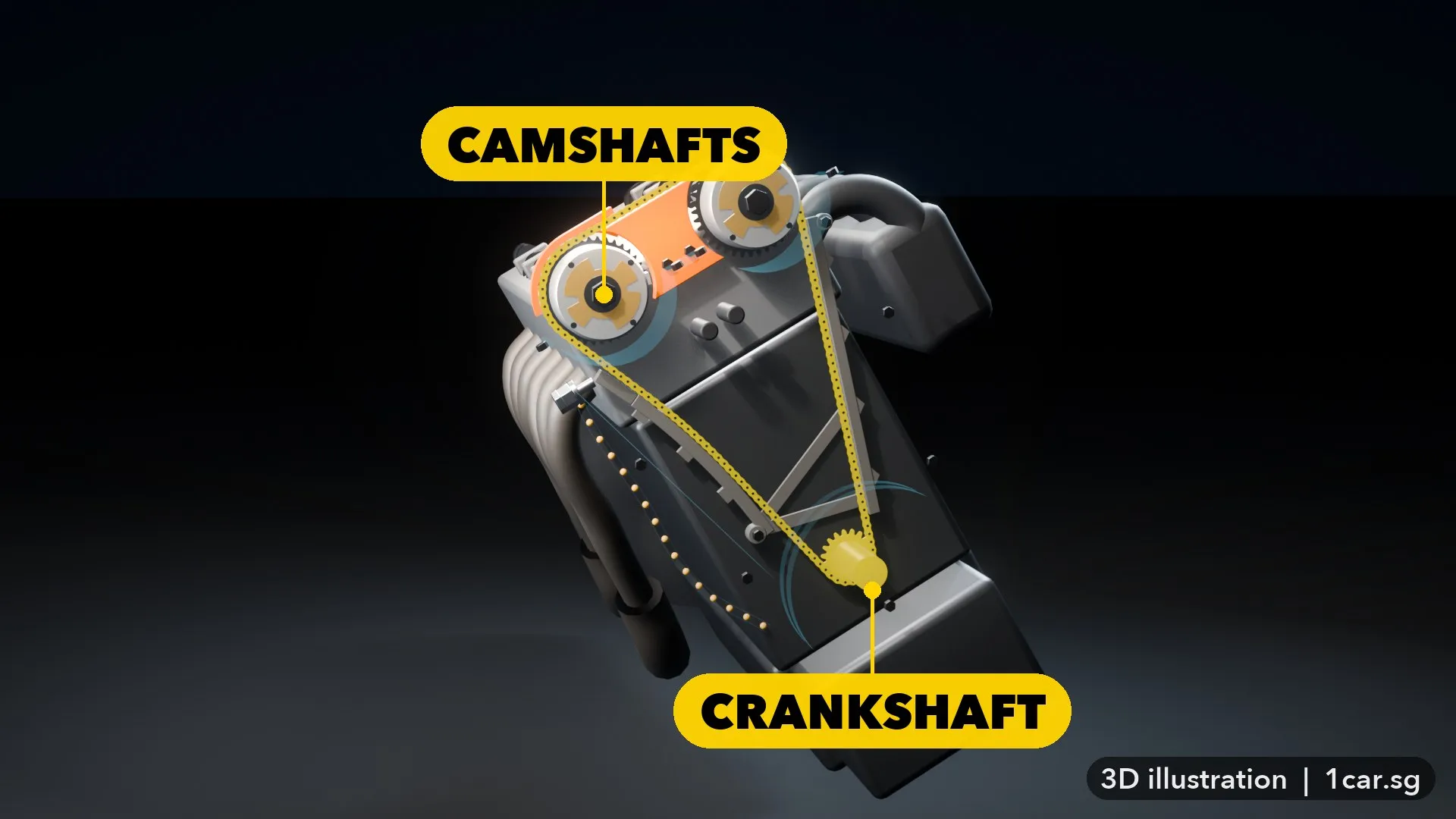
A proper chain job replaces the matched parts together: the chain, the guide rails and the tensioner, plus any sprockets that are worn. On the BMW N52 in our illustrations, the camshaft sprockets are part of the VANOS units and are replaced when worn. Afterwards the timing is locked with special tools, the engine is turned through two full turns and the timing is checked again, and fresh oil and a new filter go in.
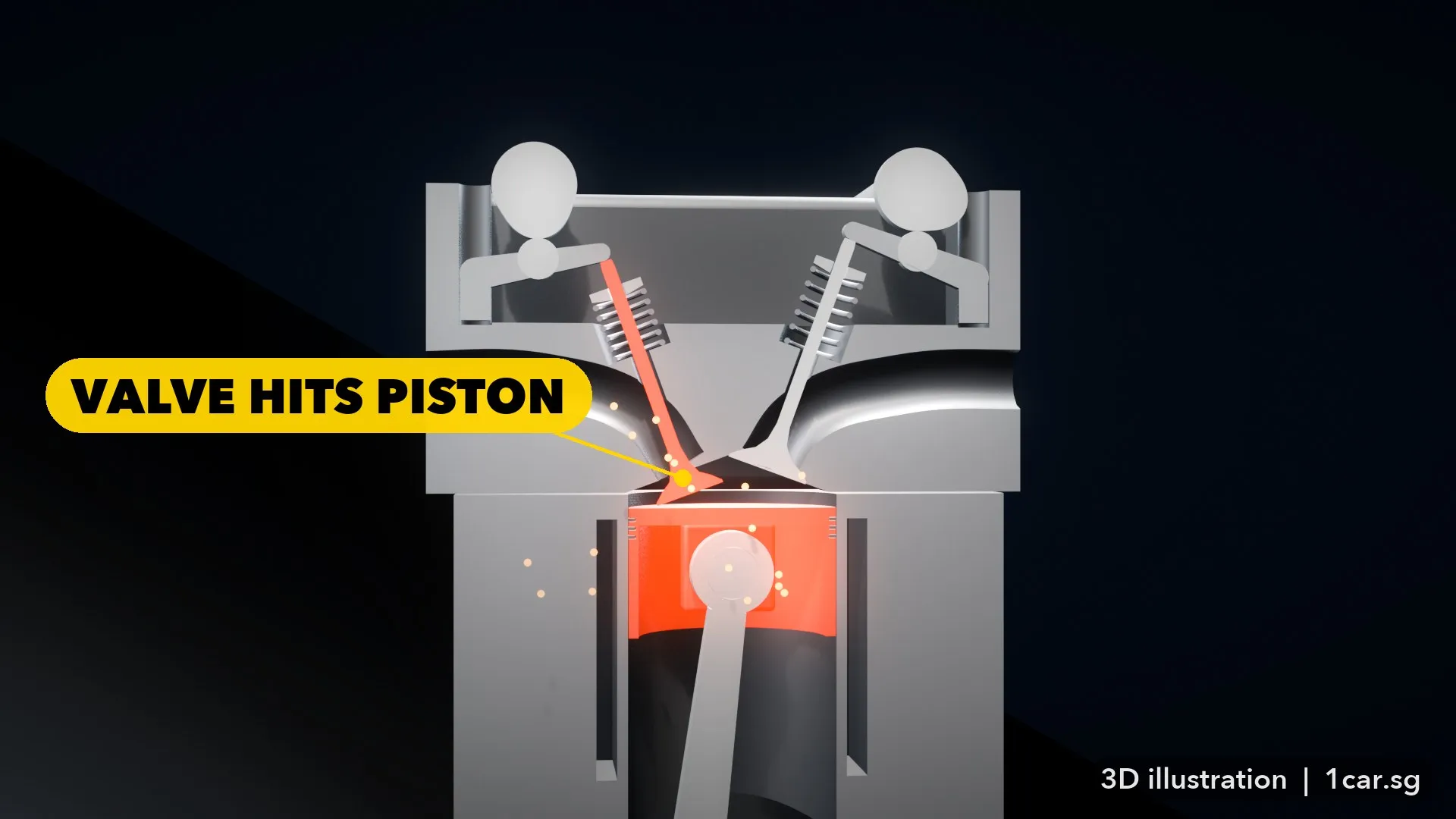
Caught early, that is the whole job. Left until the chain jumps a tooth on an interference engine, the valves can hit the pistons, and the repair becomes far bigger.
What timing chain repairs have cost at our workshop
Two documented BMW jobs. Each is a single example with its own scope, not a price list:
- BMW 523i. An engine noise traced to the timing. A cam gear problem was confirmed once the timing was opened, and the timing set with the cam gear was replaced with original BMW parts. Quoted $2,580 before GST. Read the 523i case study.
- BMW X4. A check-engine light, then a lag when starting. The timing kit was replaced, along with the two cam magnets and their o-rings and the valve cover set, which were leaking oil. $3,749.60 with GST for the whole visit. Read the X4 case study.
Your cost depends on the engine, which parts are worn and how far the wear has gone. We quote after diagnosis, and every item is approved by you before we do it.
How to look after your timing chain
Change the oil and filter on time, with the oil grade your car calls for, and sooner if most of your driving is short trips in traffic. Get a start-up rattle checked rather than waiting for it to go away. And when the chain is replaced, have the guides and tensioner done with it.