
What the owner reported
The owner came in for a walnut blasting service. The Audi A3 had accumulated carbon on the intake ports over years of driving.
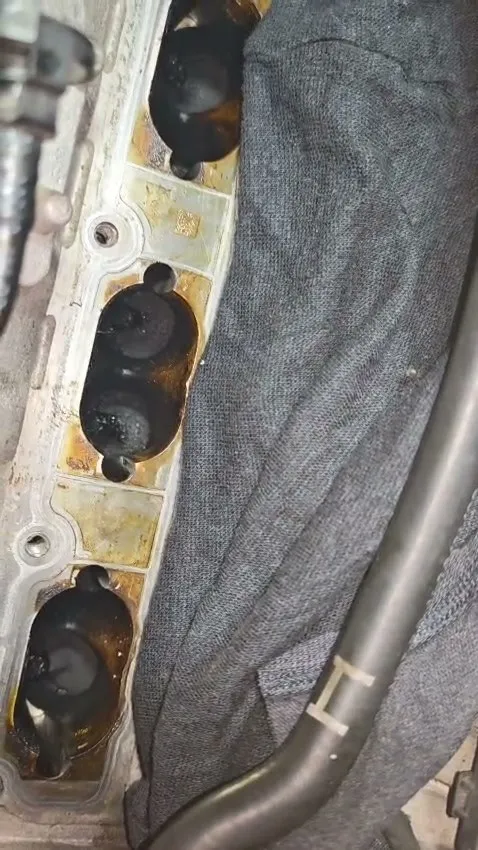
This 2010 Audi A3 came in for a walnut blasting service. The intake ports had accumulated heavy carbon deposits over the years. We stripped the intake manifold side, blasted the ports with walnut shells to remove the buildup, and had the car ready for collection the following day.
Job completed: October 2026
| Car | 2010 Audi A3 |
|---|---|
| Symptom | Carbon buildup on intake ports and valves |
| Fault found | Heavy carbon deposits on intake ports |
| Repair done | Walnut blasting of intake ports to remove all carbon deposits |
| Parts | No parts replaced; walnut media cleaning service |
| Time taken | Overnight; ready the next day |
| Cost | $380 before GST |
| Warranty | No warranty term stated for this job |
The owner came in for a walnut blasting service. The Audi A3 had accumulated carbon on the intake ports over years of driving.
Some Audi A3 models use direct-injection, where fuel is sprayed into the combustion chamber rather than into the intake port. When the intake valves are never washed by fuel, oil vapour from the crankcase vents coats them instead. Over tens of thousands of kilometres, this builds into a layer of hard carbon that restricts airflow and affects how the engine breathes.
With the intake manifold stripped back to expose the ports, the extent of the buildup was clear. The ports and valve faces had heavy carbon deposits that had built up over time.
Staff sent the owner a before video on the day the car came in so he could see exactly what was there.
In a port-injected engine, the fuel spray continuously washes the intake valves. Direct-injection engines send fuel straight to the cylinder, so the valves never see that cleaning effect. Every time the crankcase ventilation system recirculates oil vapour through the intake, it coats the valves. Over time, this bakes into hard carbon.
A moderate deposit reduces power and can cause an uneven idle. Heavy deposits restrict airflow enough to trigger misfires, roughen cold starts, and reduce throttle response.
Walnut blasting uses finely crushed walnut shells propelled by compressed air to remove the deposits without damaging the valve faces. It is the established method for this type of cleaning.
Our team removed the intake manifold to access the ports. Each port was blasted with walnut shell media until the valve faces were clean. The spent media and dislodged carbon are vacuumed out as the work progresses to prevent it from entering the cylinders.
The staff sent the owner an after video the following day so he could see the cleaned ports. The car was ready for collection the next day.
The walnut blasting service on this 2010 Audi A3 was $380 before GST.
Pricing varies by engine configuration and the number of cylinders. WhatsApp us your car model and engine for a quote.
Direct-injection engines accumulate carbon buildup over time because the intake valves are never washed by fuel. The rate depends on driving conditions, oil quality, and how often the engine gets extended highway runs. Short trips, a lot of idling, and lower-quality engine oil all accelerate the buildup.
Using a quality engine oil helps slow the process, but on a high-mileage direct-injection engine, walnut blasting is eventually necessary. No additive or fuel cleaner can remove hard carbon from intake ports.
This Audi A3 (Intake carbon cleaning) was handled at 1 Car Service, an independent workshop in Sin Ming AutoCity, Singapore. For Audi, we use dealer-level ODIS diagnostics. We hold a 4.9★ rating from 1,836+ Google reviews.
WhatsApp us your car model and engine. We will confirm if walnut blasting suits your car and give you a clear quote.
No. Walnut shells are hard enough to remove carbon deposits but soft enough that they do not scratch the metal valve faces. It is the standard method used specifically because it cleans without causing damage.
On this Audi A3, the car came in on one day and was ready the following day. The time depends on the engine layout and the amount of buildup.
Walnut blasting removes the carbon deposits, which can improve rough idle and throttle response when carbon is a contributing factor. If there are other issues such as a worn coil pack or a fuel system fault, those need to be diagnosed separately. We do a full check first to confirm carbon is a main cause before recommending the service.
This depends on the oil quality used, driving habits and the specific engine. Short-trip and city driving builds carbon faster. Our team will advise when you WhatsApp us your car details.
Chat with a specialist on WhatsApp

Point your phone camera here to chat with us instantly.
Or open WhatsApp Web →Prefer to save our number?