
What the owner reported
The owner brought the Qashqai in for a sound at about 1,700 rpm. The owner called it a moo-ing sound, and later a police-siren sound.
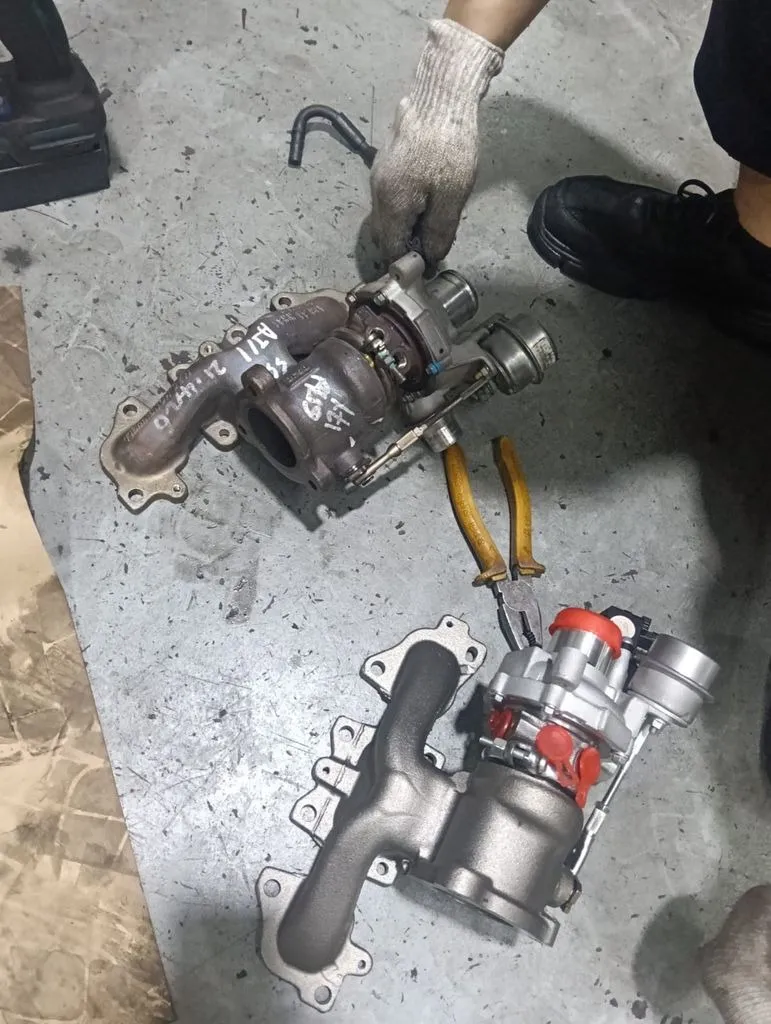
This Nissan Qashqai made a sound at about 1,700 rpm that the owner called a moo-ing, police-siren sound. We replaced the turbo with a used unit in April, and replaced it again in July. Both times the owner later said the sound was softer but still there. The owner then told us the earlier sound was fixed, naming the alternator pulley and bearing.
Job completed: July 2026
| Car | Nissan Qashqai |
|---|---|
| Symptom | A sound at about 1,700 rpm that the owner called a moo-ing, police-siren sound |
| Fault found | Not cured by the turbo changes. The owner later said the earlier sound was fixed, naming the alternator pulley and bearing. |
| Repair done | Turbo replaced with a used unit in April, and replaced again in July |
| Parts | Used turbo from a local source in April, chosen over two new original options |
| Time taken | Timeline confirmed when you book |
| Cost | Quoted and approved before work began |
| Warranty | Contact us for warranty details on the specific parts replaced |
The owner brought the Qashqai in for a sound at about 1,700 rpm. The owner called it a moo-ing sound, and later a police-siren sound.
The Nissan Qashqai is a compact SUV, and this one has a turbocharged engine. The turbocharger spins at very high speed, driven by exhaust gases, and forces compressed air into the engine for more power.
The turbo relies on engine oil for lubrication and cooling. When oil changes are delayed or the car is driven hard without warming up, the turbo bearings wear faster.
The April diagnosis is not set out in our records. We quoted two new original turbo options and a used turbo from a local source, all with labour included. We suggested the used turbo, and the owner chose it.
After fitting it, our team tested the car and heard only a wind sound, the turbo's normal air intake sound. That evening the owner said the sound was still there at 1,700 rpm, though softer. We asked the owner to come back so our technician could listen again.
Several parts on an engine can make a high-pitched noise that rises and falls with engine speed. The turbo is one. Belt-driven parts, such as the alternator with its pulley and bearing, are another.
On this car the sound stayed, softer, after each turbo change. The owner later told us the earlier sound had been fixed, and named the alternator pulley and bearing.
We quoted two new original turbo options and a used turbo from a local source, all with labour included. The used turbo was the cheapest, and the owner chose it.
We quote before any work begins and only proceed with your approval.
Change the engine oil on time and use the correct spec oil for the Qashqai's engine. The turbo bearing is entirely dependent on clean engine oil. Delayed oil changes are the primary cause of premature turbo wear.
Let the engine idle for a minute before switching off after a hard drive or motorway journey. The turbo continues to spin after the engine stops, and if the oil supply has cut off while it is still hot, the bearing cooks. A short idle-down lets the oil keep circulating while the turbo spins down.
And pay attention to sounds. A whine can come from the turbo or from belt-driven parts, so have the source confirmed early.
This Nissan Qashqai (Turbocharger replacement) was handled at 1 Car Service, an independent workshop in Sin Ming AutoCity, Singapore. We hold a 4.9★ rating from 1,836+ Google reviews.
WhatsApp us your car model and what you are hearing. We find the real fault, give you an honest quote, and only fix what actually needs fixing. Every car is road tested before you collect.
A high-pitched noise can come from the turbo, or from belt-driven parts such as the alternator pulley and its bearing. On this Qashqai the sound stayed, softer, after the turbo was changed, and the owner later said the earlier sound was fixed with the alternator pulley and bearing. Have the source confirmed early.
It depends on the turbo you choose. For this Qashqai we quoted two new original options and a used turbo, each with labour included. We only proceed with your approval.
Change the engine oil on schedule using the correct spec oil. Let the engine idle briefly before switching off after hard driving. Avoid switching off immediately after motorway driving or hard acceleration, which leaves the turbo spinning hot with no oil supply.
Yes, if left untreated. A turbo that fails completely can push engine oil into the intake and combustion chambers, causing oil burning, smoke and potentially significant internal damage. This is why a whistle under boost is worth investigating promptly rather than waiting until the noise gets worse.
Chat with a specialist on WhatsApp

Point your phone camera here to chat with us instantly.
Or open WhatsApp Web →Prefer to save our number?