Audi A4 Coolant Leak with Tank Running Dry: How We Found and Fixed It

This Audi A4 was losing coolant fast, with the tank running low, and it was seeping engine oil too. Here is how we pressure tested it, found every leak, and put it right with genuine parts.

Job completed: June 2026

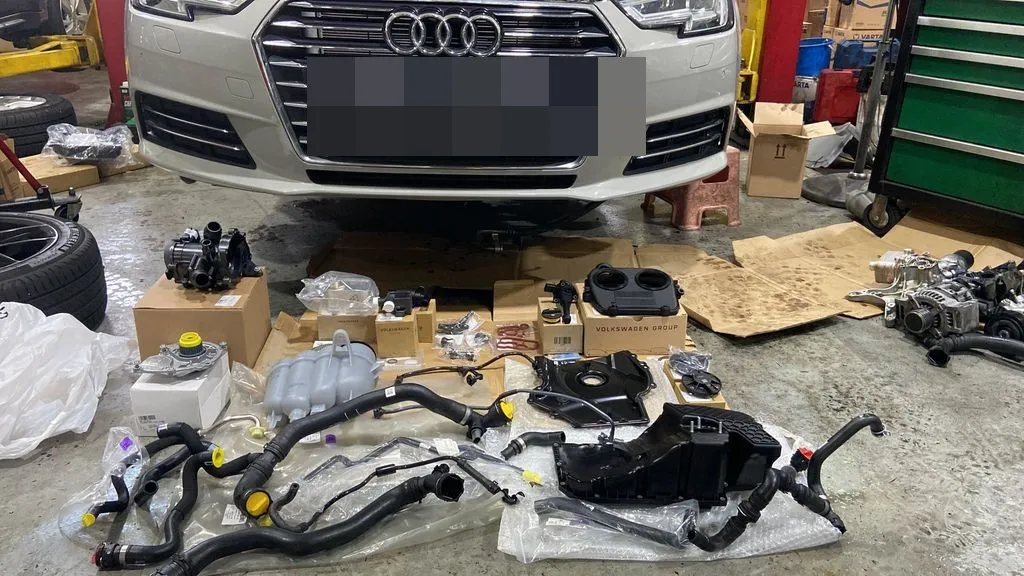
Genuine replacement coolant and oil leak parts laid out in front of an Audi A4 at our Singapore workshop

Job completed: June 2026. Last updated: August 2026. Written from our workshop job records and photos; technical details are generalised where the records do not confirm them.

CarAudi A4
SymptomCoolant leaking badly, tank running low and near dry, with engine oil seeping too
Fault foundMultiple coolant leaks (perished hoses, thermostat housing and water pump area, expansion tank) and engine oil leaks (timing covers, oil sump, oil level sensor area)
Repair doneReplaced the full coolant hose set, thermostat with water pump, auxiliary water pump, oil cooler with gasket and expansion tank; renewed the timing covers, oil sump, oil level sensor and o-rings; pressure tested and road tested
PartsGenuine Audi (VW Group) original parts
Time takenTimeline confirmed when you book
CostQuoted after the pressure test showed every leak
WarrantyRoad tested and pressure tested before handover

What the owner reported

The owner's Audi A4 was leaking coolant badly. The car came in on a tow because the coolant tank kept running low, and topping it up was not holding. Coolant was clearly going somewhere, and fast.

A coolant leak like this is not something to drive on. The owner needed the car for travelling, so the worry was real: if the tank runs dry, the engine overheats, and an overheated engine turns a hose-and-gasket job into a major repair. On top of the coolant, there were oil spots showing too, so the engine was weeping oil as well. The ask was simple. Find every leak, fix it properly, and get the car back safe and reliable.

The car

The car is an Audi A4, a turbocharged continental sedan that runs hot and is packaged tightly under the bonnet. The cooling system on these cars uses a long run of rubber hoses, plastic flanges and connectors, plus an expansion tank, a thermostat housing and an auxiliary water pump. Many of these parts are plastic or rubber, and they all sit close to a hot turbo engine.

The A4 also carries its oil seals and gaskets in the same hot environment, around the timing covers, the oil sump and the oil level sensor at the base of the sump. Heat ages every one of these parts. When a car has covered some years and mileage in Singapore traffic, it is common for several of them to start leaking at around the same time, which is exactly what we found here.

How we diagnosed it

We started with a pressure test on the cooling system. That is the proper way to find a coolant leak, because you put the system under pressure and watch where it weeps, instead of guessing from the one wet spot you can see.

Under pressure the leaks showed themselves. Coolant was seeping from several aged rubber hoses, from the thermostat housing and water pump area, and from around the expansion tank. It was not one single leak. It was a tired cooling system leaking from multiple points at once, which is why topping up never held.

With the car on the hoist we also went over the engine for the oil leak. The underside was wet and oily, and once we cleaned it and ran the car the sources came up: the timing covers, the oil sump area, and the oil level sensor at the bottom of the sump. We showed the owner the leaks before quoting, so the scope was clear before any work began.

Audi A4 engine bay opened up to trace coolant and engine oil leaks at our Singapore workshop

Why this happens on an Audi A4

Heat is the enemy of cooling and sealing parts. Singapore traffic keeps a turbo engine hot, and the cooling system runs through thousands of heat cycles. The rubber coolant hoses harden and crack, the plastic flanges and connectors go brittle, and the gaskets lose their squeeze. Once one part starts to weep, the others are usually not far behind, because they have all aged in the same heat.

The oil leaks come from the same story. The seals around the timing covers, the oil sump and the oil level sensor sit in hot oil and harden over the years until they start to seep. None of this means the owner did anything wrong. It is normal ageing on a higher-mileage continental car. The danger is leaving it: a coolant leak that runs the tank dry can overheat and damage the engine, which is a far bigger bill than hoses and gaskets.

What we did

We fixed the leaks at the source rather than chasing them one at a time, because the cooling system was tired all over and opening it up twice makes no sense.

  • Replaced the full coolant hose set, including the top and bottom hoses, the connectors, flanges and o-rings.
  • Replaced the thermostat together with the water pump, and the auxiliary water pump.
  • Replaced the engine oil cooler with a new gasket.
  • Replaced the coolant expansion tank with a new cap.
  • Renewed the timing top and bottom covers, the engine oil sump, the oil level sensor and the magnet sensor o-rings.
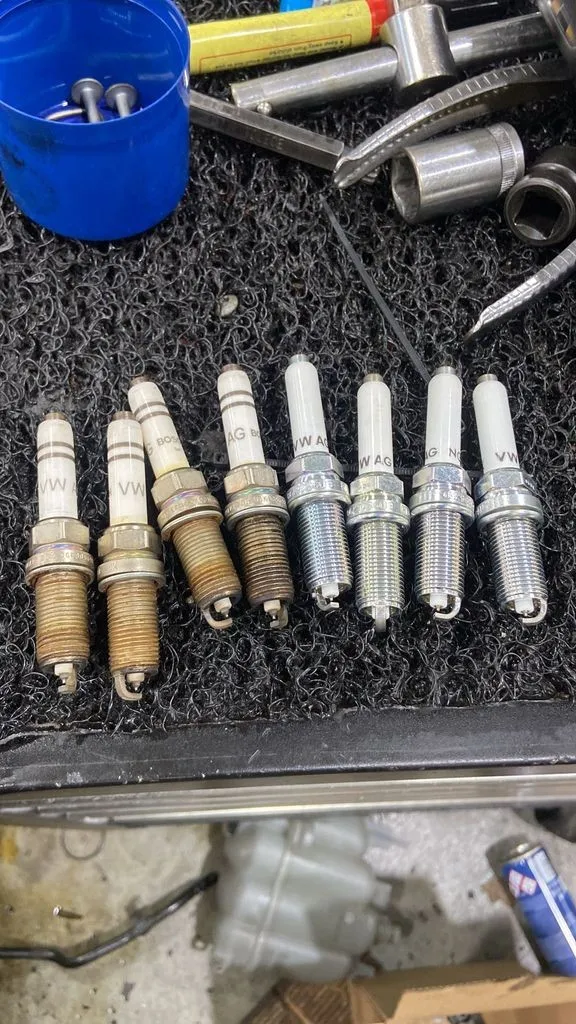
  • Carried out servicing at the same time: new spark plugs, fresh engine oil and a new oil filter.
  • Refilled the coolant, pressure tested the system, then road tested the car before handover.

All the replacement parts were genuine Audi (VW Group) original parts. Because the oil sump work meant dismantling the crossmember, we also did a wheel alignment afterwards so the car drove straight. The owner reported the car came back quieter, smoother and more responsive.

Old worn spark plugs next to new genuine spark plugs from an Audi A4 service in Singapore

Before and after

Before

  • Coolant leaking badly, tank running low and near dry
  • Towed in because topping up coolant would not hold
  • Oil spots and a wet, oily film under the engine
  • Real overheating risk if the coolant ran out

After

  • Cooling system holds pressure, no more coolant loss
  • Clean, dry engine bay and underside
  • Genuine parts fitted, pressure tested and road tested
  • Owner reported it quieter, smoother and more responsive

What an Audi A4 coolant and oil leak repair costs in Singapore

What a coolant leak repair costs depends on how many parts are leaking and how deep the job goes, so we pressure test first and quote on what we find. This was a large, multi-system job: the full coolant repair plus the engine oil leak repair and the servicing.

What moves the price is the extent of the leaks. A single hose or one gasket is a small job. Here the whole cooling system was tired, so the hose set, the thermostat with water pump, the auxiliary water pump, the oil cooler and the expansion tank all needed replacing, on top of the timing covers, oil sump and sensors. Because we use genuine Audi (VW Group) parts and the labour to reach the sump means dropping the crossmember, the figure reflects a proper, lasting repair rather than a patch. This is why we always pressure test and show you the leaks first, then quote before any work begins.

How to avoid this

You cannot stop a hose or gasket from ageing in our heat, but you can catch it early. Glance at your coolant tank now and then, and look under the car for fresh spots, coolant as well as oil. A small weep caught early is a cheap hose or gasket. The same weep ignored can run the tank dry and cook the engine, which is the expensive outcome.

If your coolant level keeps dropping and you are topping up often, do not just keep adding fluid. That is a leak telling you something. Have the cooling system pressure tested so the source is found properly. The same goes for oil spots. Use the correct coolant and oil, change them on schedule, and act on the early signs before a small leak turns into an overheat.

About the workshop

This Audi A4 (Coolant leak and engine oil leak repair) was handled at 1 Car Service, an independent workshop in Sin Ming AutoCity, Singapore. For Audi, we use dealer-level ODIS diagnostics. We hold a 4.9★ rating from 1,775+ Google reviews.

When to get a coolant or oil leak checked

Coolant or oil leaking? Get it checked before it overheats.

WhatsApp us your car model, year, mileage and a photo of the leak or the low coolant tank. We'll tell you where it is likely coming from and what it costs before any work begins. Every repair is pressure tested and road tested before you collect.

Audi A4 coolant and oil leak: common questions

How much does it cost to fix an Audi A4 coolant leak in Singapore?

It depends on how many parts are leaking. A single hose or gasket is a small job; a tired cooling system with multiple leaks is a much bigger one. This car needed the full hose set, thermostat with water pump, auxiliary water pump, oil cooler and expansion tank, plus oil leak repairs and servicing. We pressure test and quote before any work begins.

Why is my Audi A4 losing coolant?

On a higher-mileage A4 the usual cause is aged cooling parts leaking in the heat: perished rubber hoses, brittle plastic flanges and connectors, a worn thermostat housing or water pump, or a cracked expansion tank. Often several leak at once, which is why topping up never seems to hold. A pressure test finds every source.

Is it safe to keep driving with a coolant leak?

No, not if the tank is running low. If the coolant drops too far the engine overheats, and an overheated engine can mean a far bigger repair than hoses and gaskets. If your coolant warning is on or the tank keeps emptying, stop topping up and get it checked.

Why were the coolant and oil leaks fixed at the same time?

Both come from the same cause: parts ageing in a hot engine bay. When the cooling system is leaking from several points and the engine is seeping oil from the timing covers and sump too, it makes sense to do them together. You open up the car once, fix everything properly, and avoid paying labour twice.

How long does the repair take?

This Audi A4 was a large job, covering the full cooling system, the oil leaks and servicing, and reaching the oil sump meant dropping the crossmember. We confirm the timeline once we have pressure tested and seen the full scope.

8033 7708 Chat with a specialist
WhatsApp 8033 7708
Specialist advice • Honest quote • No obligation