Mercedes CLA180 Driveshaft CV Boot Failure: What Happened and the Fix

This 2018 Mercedes-Benz CLA180 AMG Line came in with grease marks near the front wheel. The CV boot on the front driveshaft had split, letting grease escape. We replaced the driveshaft and confirmed the car drove cleanly.

Job completed: June 2026

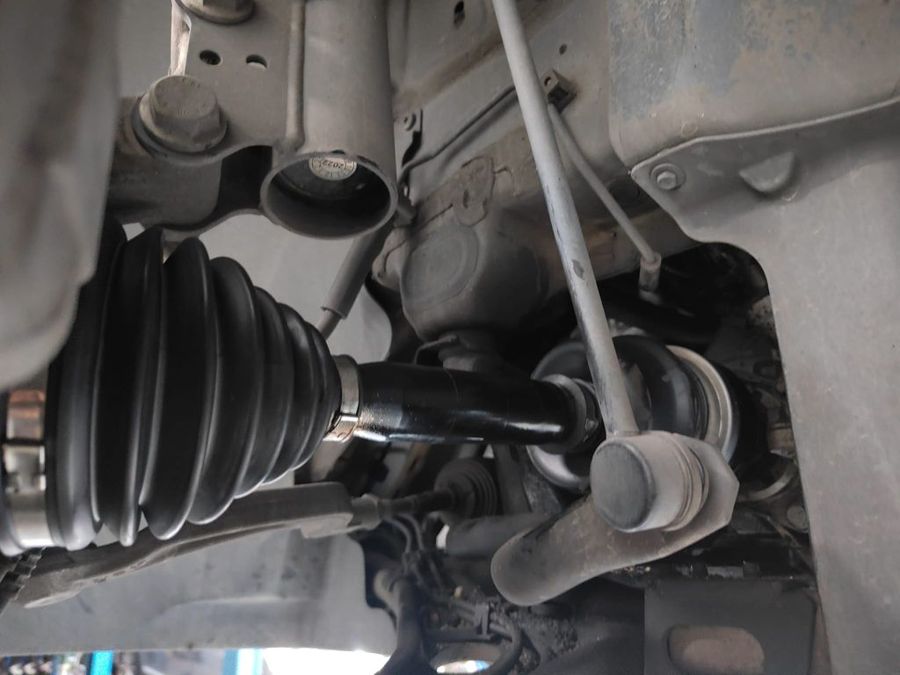
Torn CV boot on Mercedes-Benz CLA180 front driveshaft showing grease leakage, photographed before removal at our Singapore workshop

Job completed: June 2026. Last updated: August 2026. Written from our workshop job records and photos; technical details are generalised where the records do not confirm them.

Car2018 Mercedes-Benz CLA180 AMG Line (grey)
SymptomGrease marks around the front wheel well, faint clicking on tight turns
Fault foundTorn CV boot on front driveshaft, grease leaking, joint beginning to contaminate with road grit
Repair doneFront driveshaft assembly replaced
PartsQuality replacement driveshaft (OEM-compatible specification)
Time takenTimeline confirmed at drop-off
CostQuoted after inspection confirmed the torn boot and contaminated joint
WarrantyRoad tested and drive confirmed smooth before handover

What the owner noticed

The owner noticed what looked like grease or oil marks on the inside of the front wheel arch. It had been there a few days and was getting worse. On certain parking manoeuvres requiring a full lock, there was a faint clicking sound.

Grease near the front wheel on a front-wheel-drive car like the CLA180 usually means one thing: a torn CV boot. The constant velocity joint sits at the end of the driveshaft and allows the shaft to flex as the suspension moves and the wheel steers. The boot is a rubber bellows that holds grease inside and keeps dirt out.
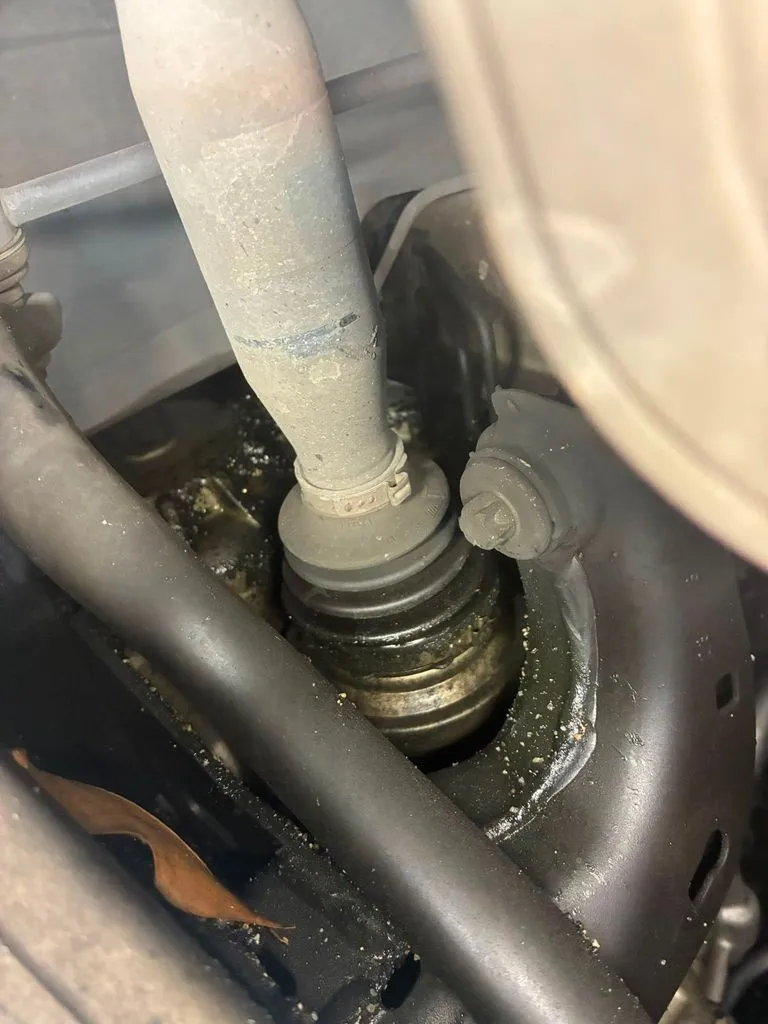
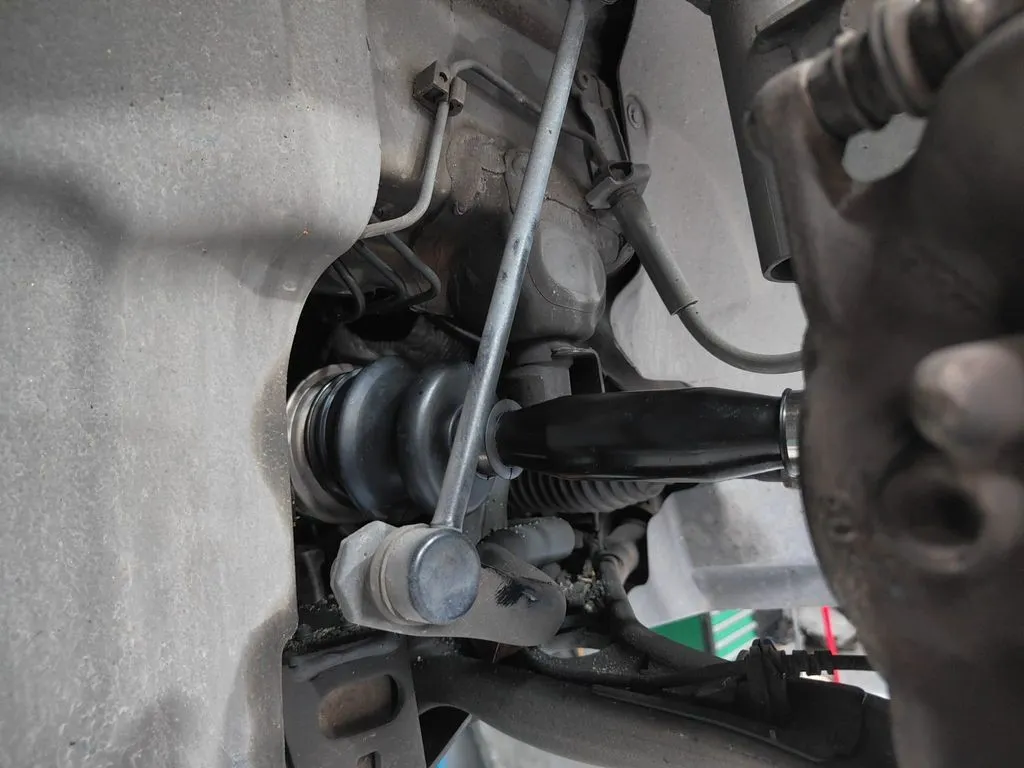
Torn and cracked CV boot on the CLA180 front driveshaft with grease splattered around the joint

The CLA180 drivetrain and how CV joints work

The Mercedes-Benz CLA180 uses a front-wheel-drive layout. Engine power goes through the gearbox and out via two front driveshafts to the wheels. Each driveshaft has a constant velocity (CV) joint at each end. The outer CV joint, at the wheel hub end, does the most work: it has to transmit power through a varying angle as the suspension moves up and down and the wheel turns from lock to lock.

The CV joint is packed with high-pressure grease and sealed by a rubber boot. The boot tolerates years of flexing, heat, and vibration. When it cracks or tears, grease escapes and road dirt gets in. A joint running without grease wears through quickly, developing the clicking sound on full lock that is the classic symptom of a worn CV joint.

New replacement driveshaft being fitted to the 2018 Mercedes-Benz CLA180 at our Singapore workshop

What we found on the lift

We lifted the car and inspected the front driveshafts. The outer CV boot on one side had a clear tear and grease was spread around the joint. Grit and dust had already entered the joint housing.

When contamination gets into a CV joint, the joint is already beginning to fail. Boot-only replacement at this stage leaves a contaminated joint inside a fresh boot: the clicking noise returns within months. Replacing the complete driveshaft assembly is the correct fix, giving the car a new joint, fresh grease, and an intact boot in one piece.

Vehicle registration document confirming this is a 2018 Mercedes-Benz CLA180 AMG Line Auto, Grey, with identifying details redacted

Why CV boots fail

The rubber CV boot is designed to flex many millions of times over the life of the car. Singapore's heat and humidity accelerate rubber aging faster than in temperate climates. A boot that might last 10 or 12 years in Germany may start cracking at 6 to 8 years here.

Kerbing the wheel or running over a hard object can also split a boot directly. Once cracked, the tear grows quickly under the flexing motion: what starts as a hairline crack becomes an open split within a few thousand kilometres.

The important thing is to catch it before the joint wears. Grease marks near the wheel are the first warning. Clicking on full lock comes later, and means the joint has already been running dry for some time.

What we did

We replaced the front driveshaft assembly.

  • Lifted the car and removed the front wheel on the affected side.
  • Disconnected the driveshaft from the hub and the gearbox.
  • Removed the complete driveshaft assembly.
  • Fitted the replacement driveshaft with a new CV joint, fresh grease, and intact boot.
  • Torqued all fasteners to spec and refitted the wheel.
  • Lowered the car and checked the steering and suspension geometry visually.
  • Road tested to confirm smooth power delivery with no clicking or vibration on full lock or straight ahead.

Before and after

Before

  • Grease marks near front wheel well, getting worse over days
  • Faint clicking on full lock steering
  • CV boot split, grease leaking, dirt entering the joint

After

  • New driveshaft fitted, fresh CV joint and intact boot
  • No clicking on full lock or during road test
  • Drive smooth before handover

What a Mercedes CLA180 driveshaft replacement costs in Singapore

What a front driveshaft replacement costs depends on whether the inner CV joint is also worn and whether both sides need replacing at the same time, so we quote after inspection.

The cheaper option is to replace only the CV boot. But when a torn boot has already let dirt into the joint, a boot-only replacement leaves a contaminated joint inside. The clicking will return and you end up paying for the driveshaft anyway. Replacing the complete assembly when contamination is confirmed is the more honest and cost-effective advice.

We quote before we start.

How to catch a CV boot problem early

CV boot failures are easy to catch early and expensive to ignore.

  • Check inside the front wheel arches occasionally, especially after kerbing the wheels. Fresh grease splatter around a rubber boot is an early warning.
  • At every service, ask for the driveshaft boots to be visually inspected on the lift. A crack found early, before the joint is contaminated, is a boot replacement only. A joint contaminated with dirt needs the whole driveshaft.
  • If you hear a clicking sound on full lock, have it inspected within a few weeks. The joint is already worn; it will not heal itself.
  • Avoid running the steering to full lock and accelerating hard simultaneously. Full-lock acceleration puts the highest stress on the outer CV joint.

About the workshop

This Mercedes-Benz CLA180 AMG Line (Front driveshaft CV joint replacement) was handled at 1 Car Service, an independent workshop in Sin Ming AutoCity, Singapore. For Mercedes-Benz, we use dealer-level XENTRY diagnostics. We hold a 4.9★ rating from 1,775+ Google reviews.

Signs your Mercedes driveshaft CV joint needs attention

Noticing grease near a wheel or hearing a clicking noise?

WhatsApp us a photo of the grease marks and which Mercedes you drive. We will tell you honestly whether it is the driveshaft, the CV boot, or something else, and quote before any work begins.

Mercedes CLA180 driveshaft and CV joint: common questions

How much does a Mercedes CLA180 driveshaft replacement cost in Singapore?

It depends on the specification of the replacement part and whether one or both sides need replacing, so we inspect first. We quote before we start.

Can I just replace the CV boot instead of the whole driveshaft?

If the boot is caught very early, before the joint is contaminated, a boot replacement is a reasonable option. But if the boot has already split and grease has escaped, dirt will have entered the joint. Replacing just the boot on a contaminated joint means the clicking returns within months. We recommend replacing the complete driveshaft when contamination is found.

Is a clicking sound on tight turns always the CV joint?

On a front-wheel-drive car like the CLA180, a clicking sound specifically on full-lock turns is almost always the outer CV joint. Other sources (loose heat shields, worn suspension bushes) tend to produce different sounds at different conditions. We inspect and confirm before recommending a repair.

Can I drive the car with a torn CV boot?

You can, for a limited time, if there is no clicking yet. But every kilometre without a boot accelerates contamination and wears the joint faster. Once clicking starts, the joint is already in the early stages of failure and the driveshaft should be replaced promptly.

8033 7708 Chat with a specialist
WhatsApp 8033 7708
Specialist advice • Honest quote • No obligation